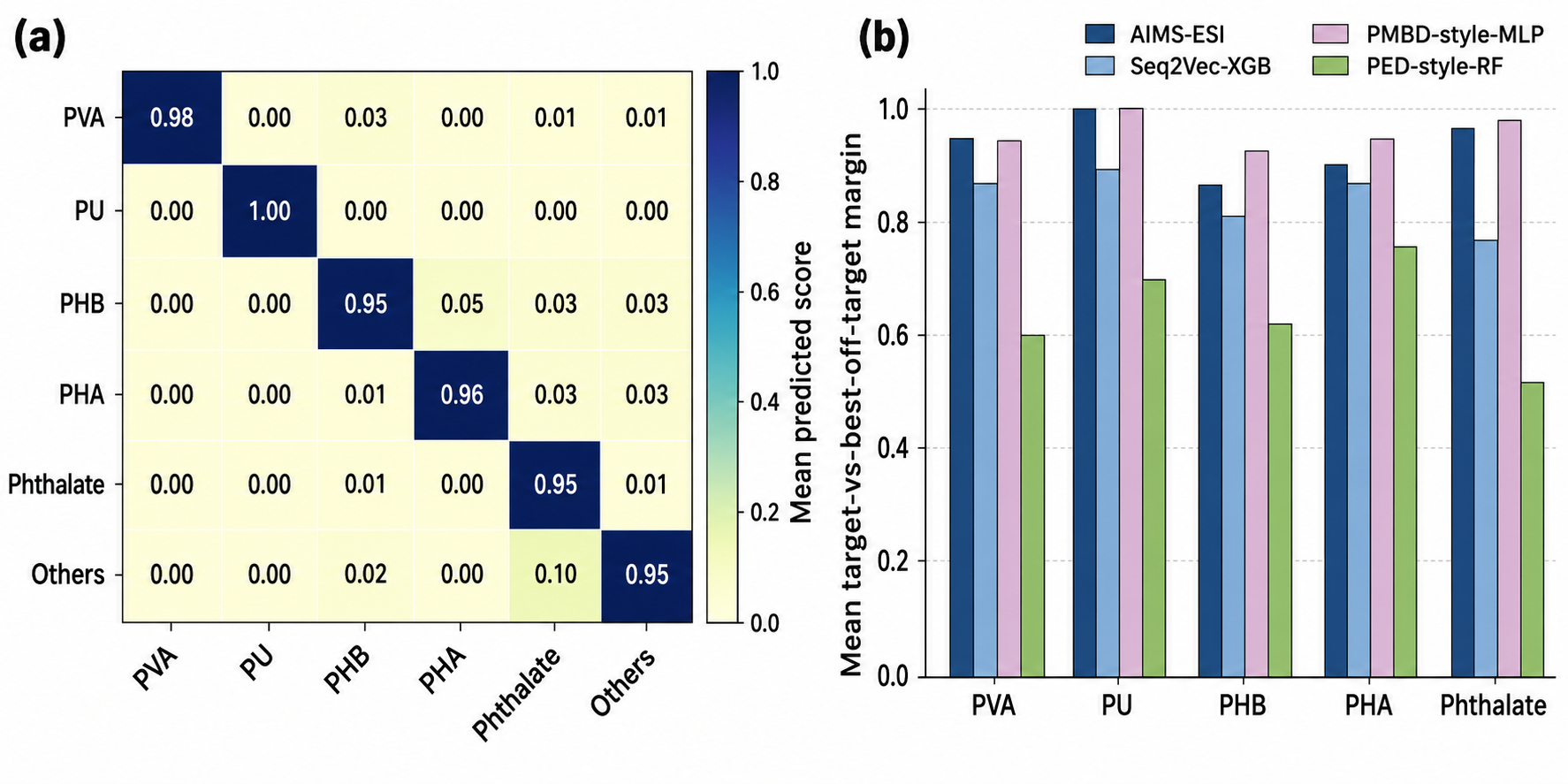
Polymer prioritization
Mean selectivity margins were 0.942 (PVA), 0.998 (PU), 0.870 (PHB), 0.923 (PHA), and 0.935 (phthalate).
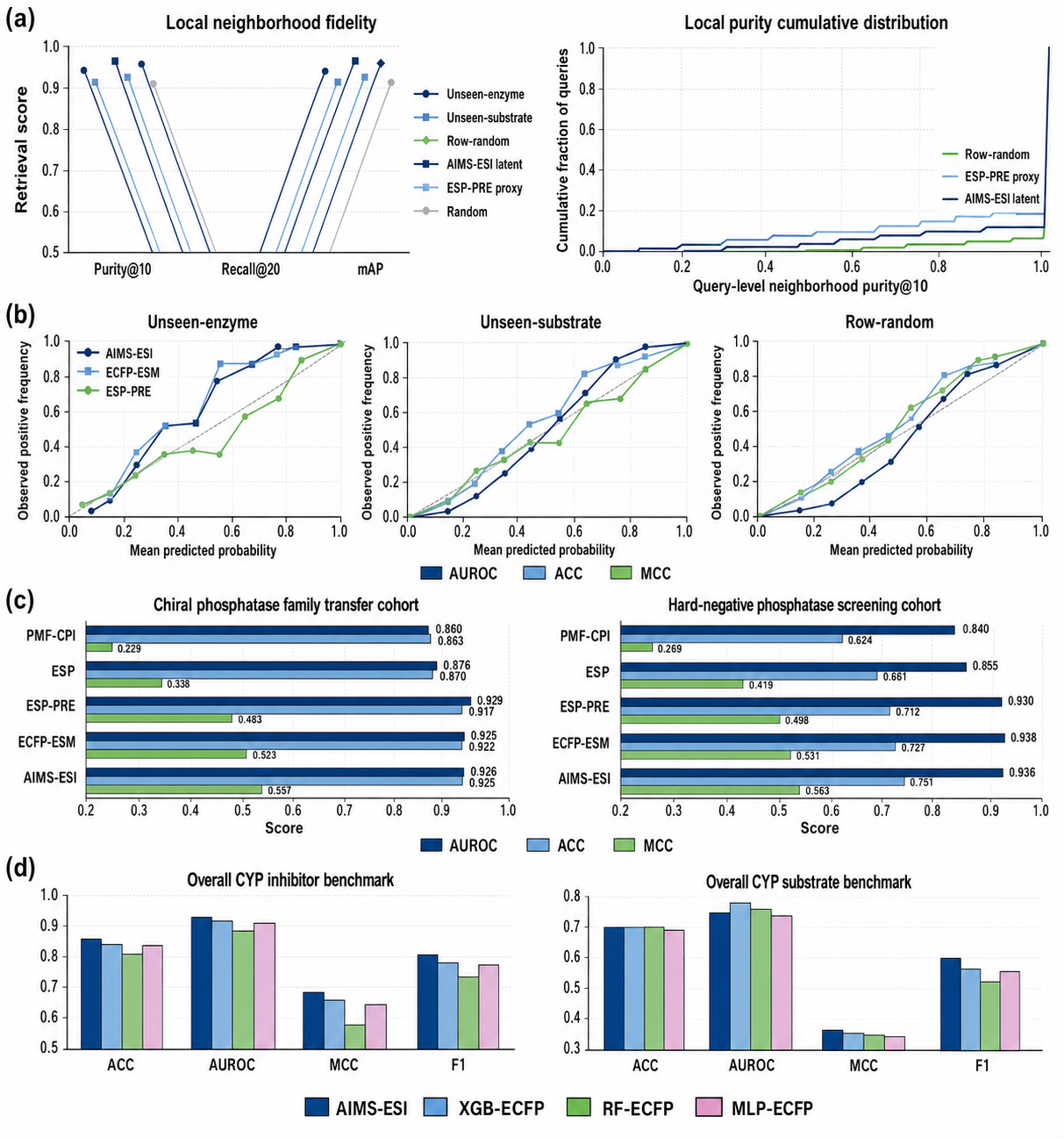
Benchmark generalization, architectural ablation, representation quality, transfer learning, and retrieval-oriented enzyme prioritization.
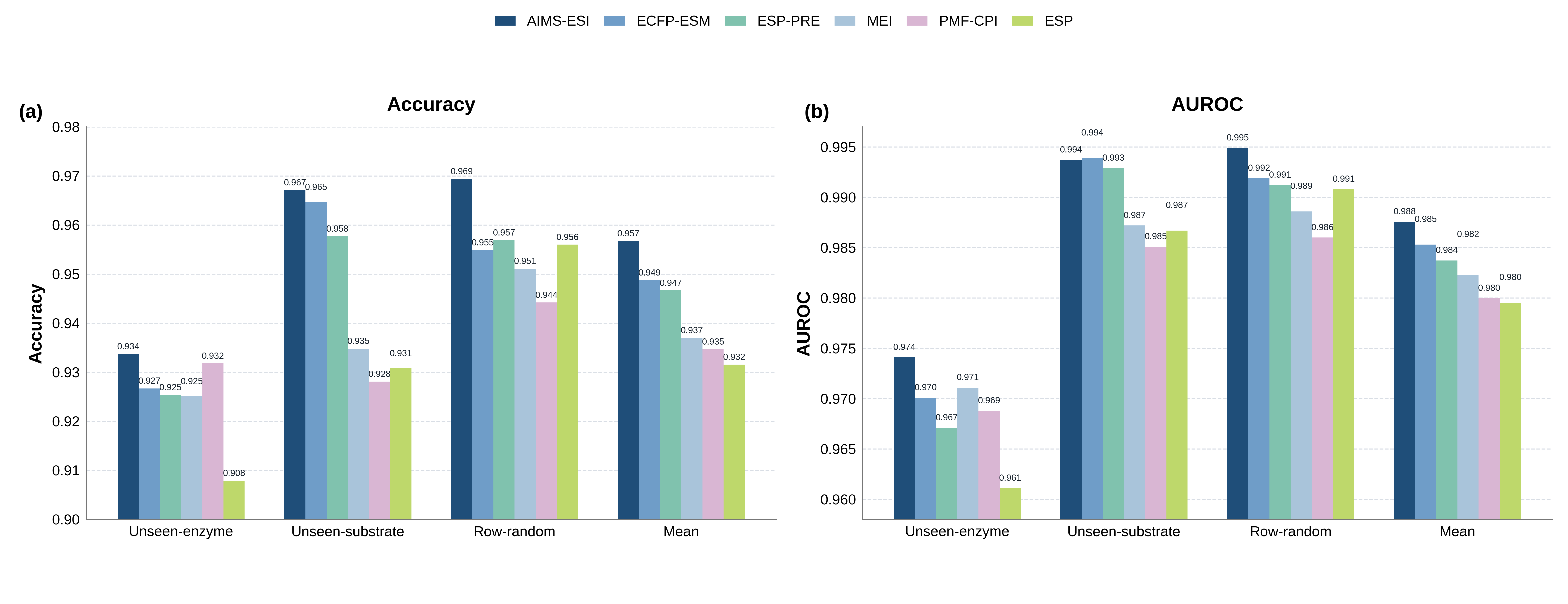
Benchmark evaluation
AIMS-ESI was evaluated against PMF-CPI, ECFP-ESM, ESP, ESP-PRE, and MEI using identical data sources, split definitions, and metric sets.
| Split | ACC | AUROC | MCC | F1 | Evaluation focus |
|---|---|---|---|---|---|
| Unseen enzyme | 0.9337 | 0.9741 | 0.8671 | 0.9428 | Enzyme-level shift |
| Unseen substrate | 0.9671 | 0.9937 | 0.9342 | 0.9708 | Substrate-level shift |
| Row random | 0.9694 | 0.9949 | 0.9359 | 0.9748 | Pair-level reference |
Ablation and representation
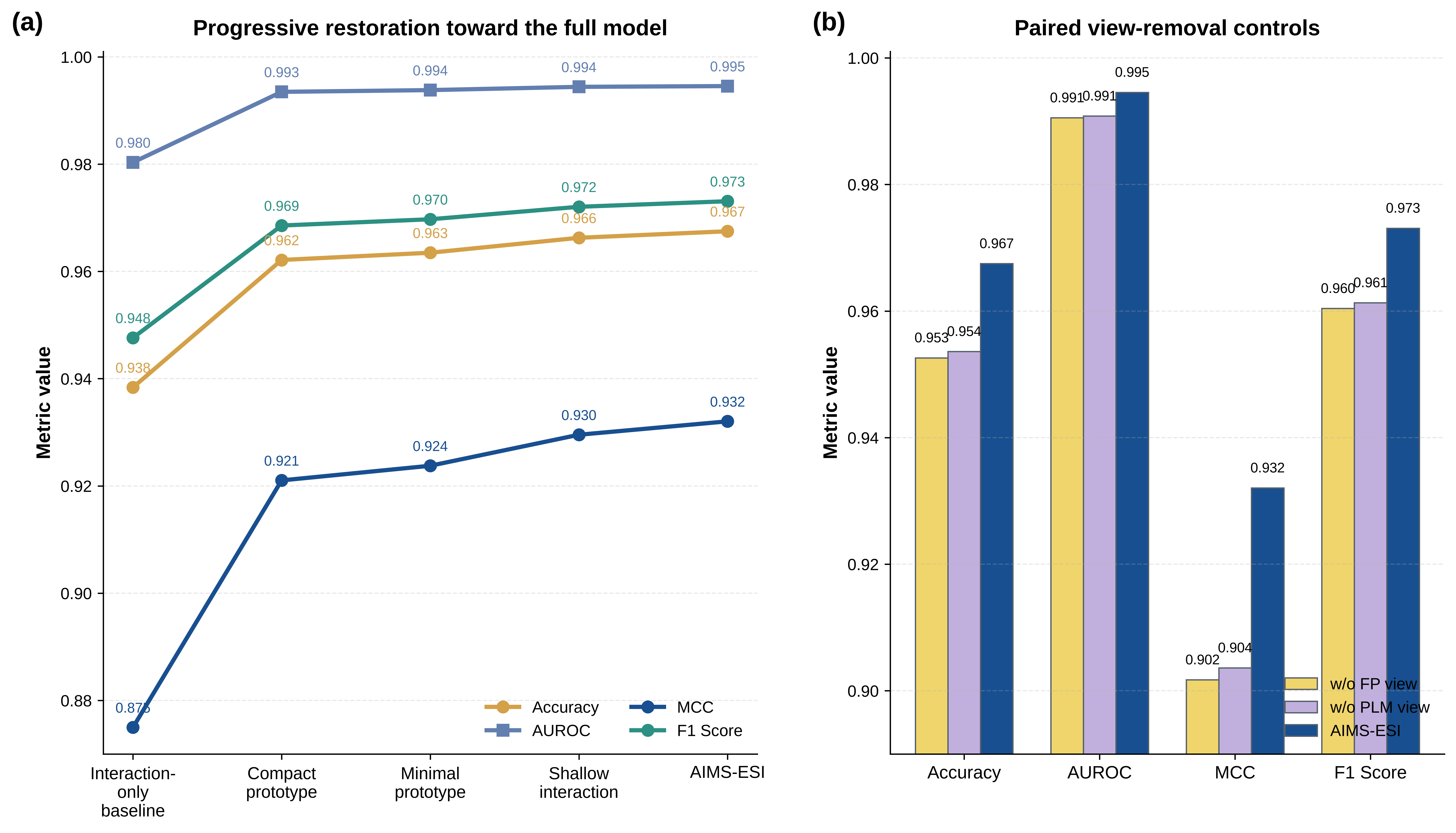
Stepwise restoration and paired view-removal controls show that multiview evidence, hierarchical interaction modeling, and adaptive routing make complementary contributions.
Application studies
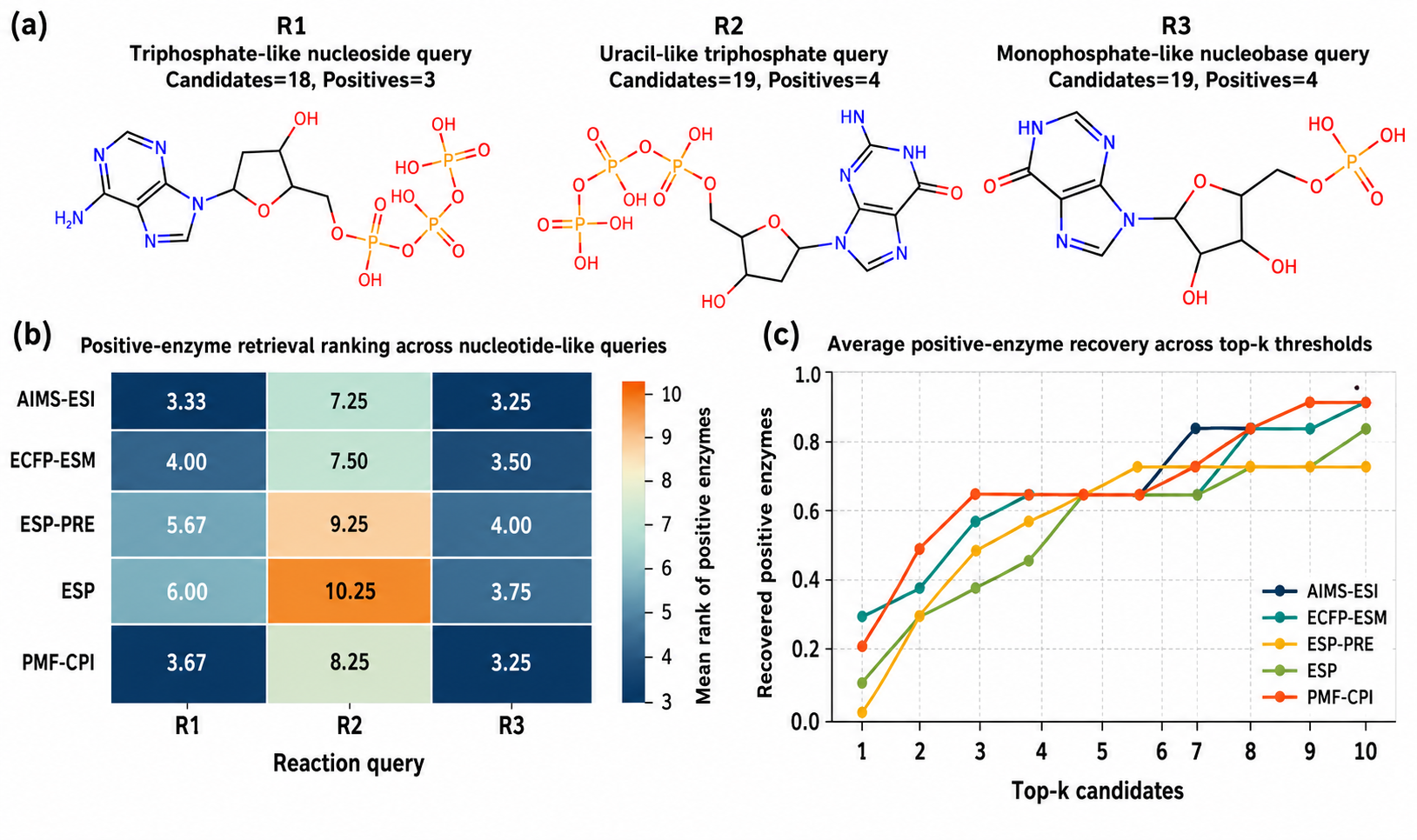
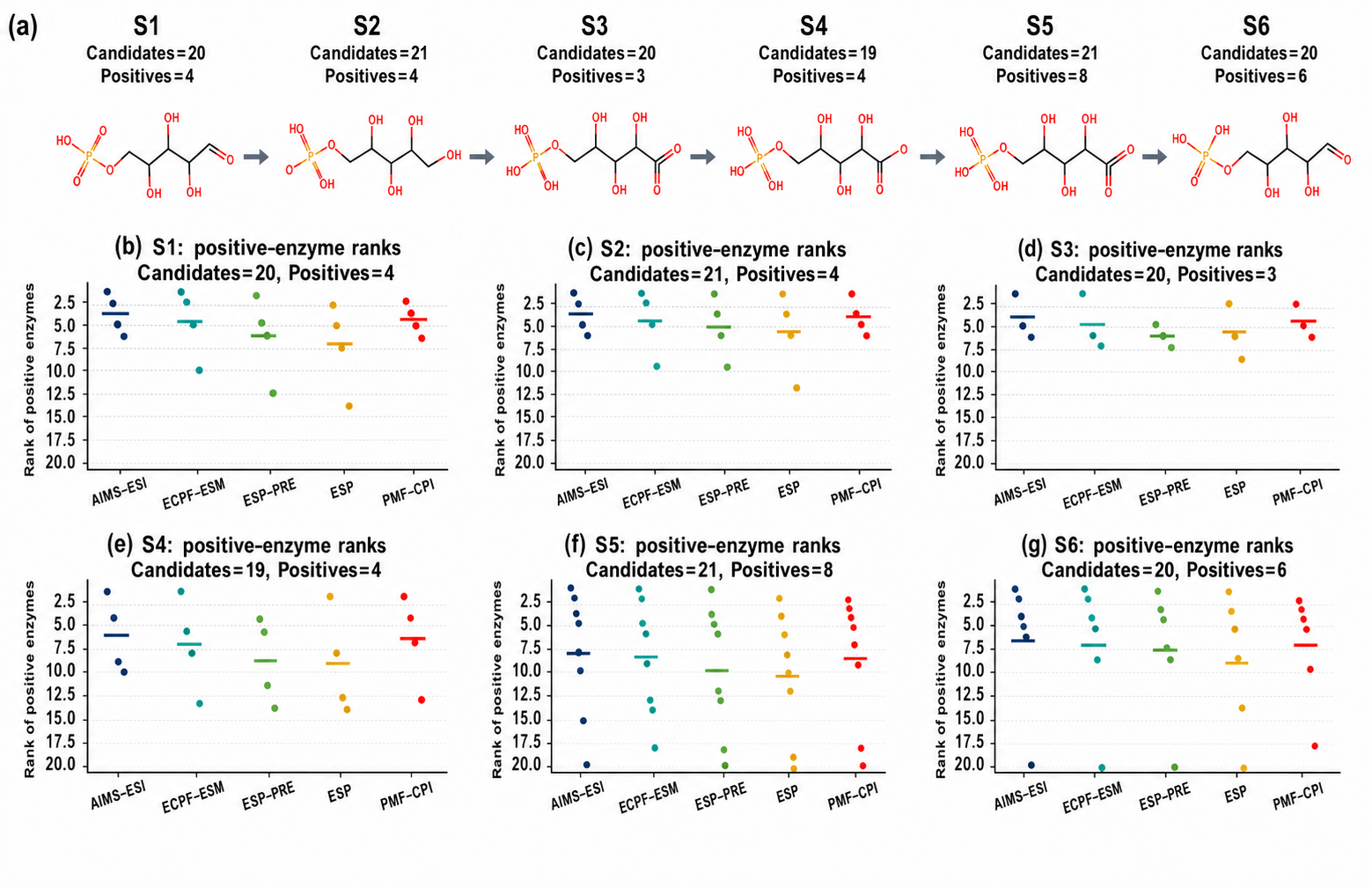
The same compatibility representation supports polymer-specific screening and repeated enzyme retrieval across individual reactions and pathway-style panels.
Mean selectivity margins were 0.942 (PVA), 0.998 (PU), 0.870 (PHB), 0.923 (PHA), and 0.935 (phthalate).
Across three nucleotide-like queries, AIMS-ESI achieved the lowest average mean positive-enzyme rank: 4.61.
Across six related queries, the average mean positive-enzyme rank was 4.88 with top-10 recovery of 0.930.